
Story 4: 2043, The Coast That Adapts –
What Climate Action Delivers for Coastal Communities
This is Story 4, a part of the 5 Generations series. I showed you what climate failure looks like for vulnerable people in the United Kingdom. Now I am showing you what climate success delivers. Same five people. Same five generations. Different choices. Based on UK Net Zero pathways and Climate Change Committee scenarios, this is what happens when we act with the courage and urgency this crisis demands.
This is Story 4 of 10: The Hopeful Alternatives
Your Daughter Turned 18: 2043
Your daughter turned eighteen in 2043. She is celebrating finishing her A-levels by helping her grandmother move and not abandoning a home to the sea, but relocating to the beautiful, new climate-resilient housing development built on higher ground two miles inland.
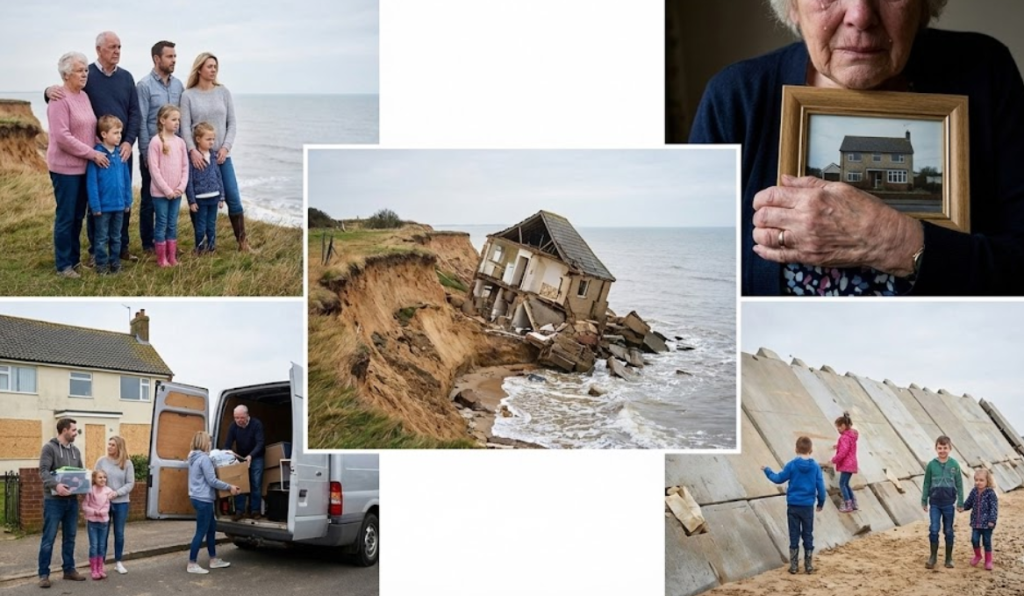
The removal van is parked outside her grandmother’s bungalow, and the morning is full of the particular chaos of moving day: boxes everywhere, furniture wrapped in blankets, the cat yowling from his carrier. But there is laughter too. Your daughter’s cousins have come to help. Someone has brought bacon sandwiches and a thermos of tea. The radio plays in the kitchen while the last cupboards are emptied.
The family home in Norfolk, where three generations gathered, cannot stay where it is. Some coastal change was inevitable. But the difference is profound: this is a managed transition, not a desperate retreat.
Your grandmother pauses by the living room window, looking out at the garden she has tended for forty years. The roses she planted when your daughter was born. The apple tree that your grandfather put in the year they got married. This is hard. Your daughter sees that. The leaving is hard even when the leaving is right.
But then your grandmother turns and says something your daughter will remember for the rest of her life.
“When I was your age,” she says, “I thought this house would fall into the sea while I was still in it. I thought we would lose everything. I thought nobody cared about places like this.” She pauses, looking around the room that is nearly empty now. “They did care. They came up with a plan. They gave us time. They gave us somewhere to go.”
The Coastal Communities Adaptation Programme, launched in 2026, identified at-risk properties and provided fair compensation plus priority access to purpose-built, energy-efficient housing in safer locations.
Your grandmother is not losing her investment or her dignity. She is moving to a modern home designed for the climate we face, in a community specifically planned to maintain social connections and local heritage.
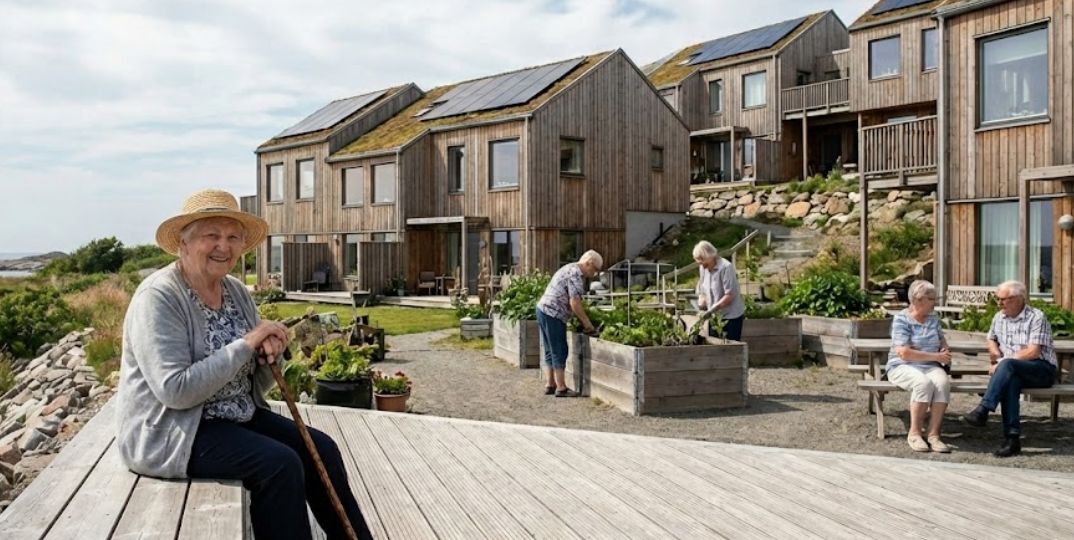
The new development is called Saltmarsh Rise. The name honours both what was lost and what was gained, because between the old coast and the new homes, a vast area of salt marsh has been restored. The marsh is a living sea defence, absorbing storm surges, providing habitat, and storing carbon. Your daughter visited it last month with her grandmother, walking the new boardwalk that winds through the reeds, watching the avocets and the marsh harriers that have returned to breed.
Storm surges still occur, but they are less frequent and less severe than they would have been under high-emissions scenarios. The coastal defences built through the 2030s protect major population centres. Natural flood management, including restored salt marshes and sand dune systems, provides effective buffering for less densely populated areas.
The new house is smaller than the old one, but better in almost every way. Properly insulated. Easy to heat. No damp, no drafts, no rooms that are too cold to use in winter. Your grandmother’s energy bills will drop by seventy per cent. Her new neighbours are people she has known for decades, families from the same coastal villages, relocated together so that communities remained intact.
The Reality:
Under net-zero pathways, sea level rise by 2050 is limited to approximately 20-30cm rather than the 35-40cm under high-emissions scenarios, with much slower subsequent rises.
The coastal adaptation strategy, informed by the Third UK Climate Change Risk Assessment, relocated approximately 45,000-65,000 homes (rather than 200,000) through planned, funded transitions.
Nature-based coastal defences provide protection whilst enhancing biodiversity.
The circular economy transition means building materials from decommissioned coastal homes are reused in new climate-resilient developments.
Sources: Climate Change Committee adaptation pathways, UK Climate Projections net zero scenarios
Your daughter watches her grandmother walk through rooms filled not with grief but with photographs being carefully packed for the new house. The move is bittersweet, yes, but it is dignified. Fair. Planned.
The last item to leave is the kitchen table. Three generations have sat around this table. Birthday cakes and Christmas dinners and ordinary Tuesday suppers. Your daughter runs her hand along its surface, feeling the grooves and marks of decades of family life.
“This is coming with us,” your grandmother says firmly. “The house can go. The table stays in the family.”
They load it into the van together, and your daughter thinks about what this table will see in the years to come. New gatherings. New traditions. Her own children, perhaps, sitting where she sat as a girl.
The drive to Saltmarsh Rise takes fifteen minutes. The new house is waiting, keys in the door, the heating already on to take the chill off. The rooms are bright and warm. The garden is small but south-facing. Through the kitchen window, you can see the edge of the marsh, and beyond it, just visible on the horizon, the sea that will not take this home.
Your daughter feels something unexpected: hope.
She asks not why this was allowed to happen, but how her generation can build on this foundation. She sees that tough decisions were made early enough to prevent catastrophe. That vulnerable people were centred in the response, not abandoned to market forces.
That evening, the family gathers around the old kitchen table in the new house. Someone has brought champagne. Someone else has ordered fish and chips from the shop in the village. The cat has finally stopped yowling and is exploring the corners of his new territory.
Your grandmother raises her glass.
“To the old house,” she says. “And to the people who made sure we did not have to lose everything when we left it.”
Your daughter will remember the generation that chose to act. Can you imagine her pride in us?
The Choice
Last week, I showed you the same story in 2043 under climate failure: watching her grandmother lose everything to the sea, her inheritance, salt water and displacement, furious at the generation that let it happen.
This week, she is helping her grandmother move with dignity to climate-resilient housing, asking how her generation can build on this foundation, feeling hope and pride.
The difference? Planned coastal adaptation funded and implemented in the 2020s and 2030s.
Both futures are possible. The question is which one we choose.
Coming Next Week: Your granddaughter in 2058 – The Summer without water. “Your granddaughter, now thirty-five, lives in what used to be called the breadbasket of England. East Anglia in 2058 is experiencing its fourth consecutive year of agricultural drought, a term that has become grimly familiar. A term that means food insecurity. A term that means watching crops fail and prices soar, and elderly people making choices no one should have to make”