

This is Story 4 of 5 of the Hopeful Alternatives, a part of the 5 Generations series. I showed you what climate failure looks like for vulnerable people in the United Kingdom. Now I am showing you what climate success delivers. Same five people. Same five generations. Different choices. Based on UK Net Zero pathways and Climate Change Committee scenarios, this is what happens when we act with the courage and urgency this crisis demands.
Story 8:2075: The City That Cares
What Climate Action Delivers for Vulnerable Elders
2075: Your Great Granddaughter, 75 years old.
Your great-granddaughter is seventy years old in 2075. She lives in a purpose-built, climate-adapted housing cooperative in East London, one of thousands of such developments that transformed British cities between 2030 and 2060.
She wakes, as she always does, to the sound of the dawn chorus from the garden below. The birds have been particularly noisy this week, celebrating the warm weather with a symphony that would have astonished her grandparents. In their day, urban bird populations were declining. Now, the green corridors and rooftop gardens and living walls that thread through the city provide habitat for species that had nearly disappeared.
It is August. The temperature reaches 30°C on the warmest afternoons, warm by historical standards but far below the 38°C+ that would have occurred without climate action. Her flat, built to Passivhaus standards in 2048, maintains comfortable temperatures through intelligent passive design. Deep-set windows provide shade.
Thermal mass regulates temperature. When additional cooling is needed, her highly efficient heat pump draws power from renewable electricity that costs a fraction of what her parents paid.
She makes breakfast in a kitchen that never gets too hot, even when the oven is running. The windows are positioned to catch the morning breeze. The walls are thick, insulating against both heat and cold. The building feels solid, permanent, designed to last for generations.
Her neighbour, Raj, knocks at nine. They have a standing appointment for morning tea, a habit that started five years ago when they both moved in. Raj brings biscuits from the ground-floor bakery, where a young couple makes everything from scratch using flour from the urban mill two streets away.
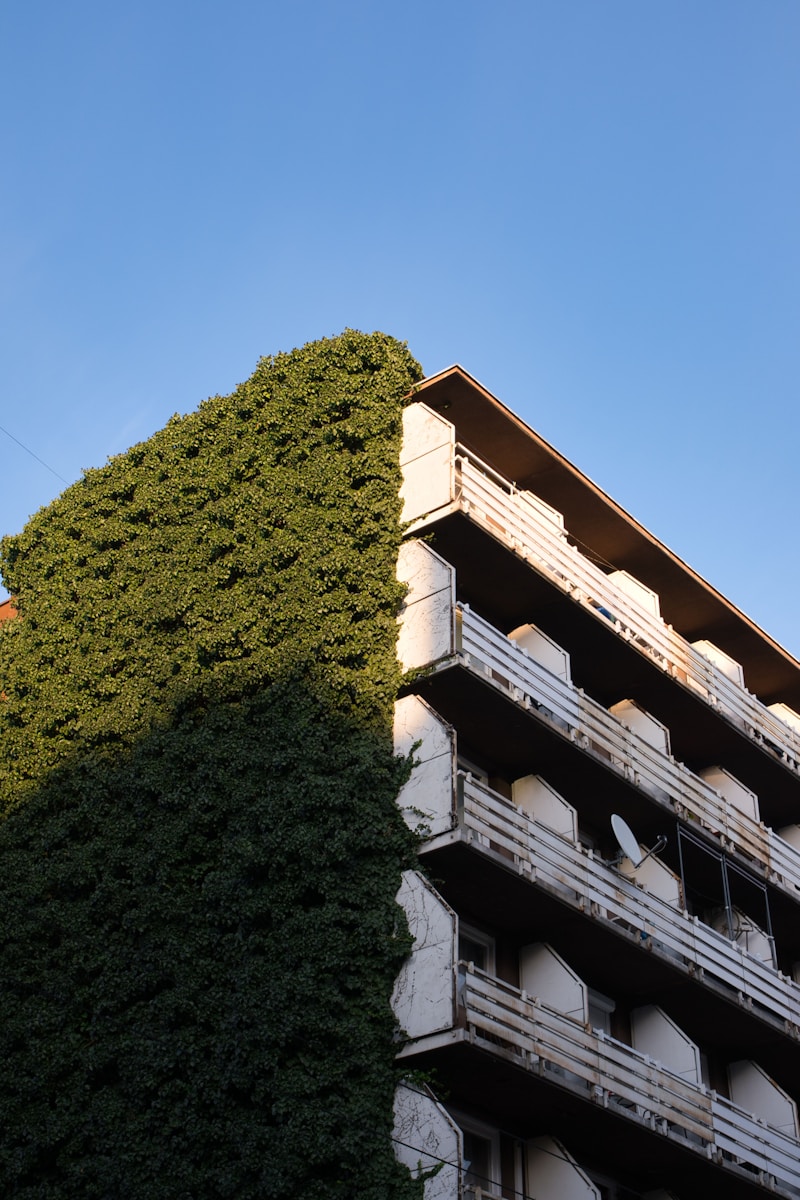
They sit on her balcony, shaded by the climbing plants that cover the building’s exterior, and talk about their grandchildren, the news, and the garden project they are both involved with.
She has chronic obstructive pulmonary disease, yes, but it is less severe than it would have been. She benefited from the dramatic improvements in air quality that followed the fossil fuel phase-out decades ago. Every breath is easier than it would have been in the alternative future. When she was diagnosed ten years ago, her doctor told her that her case was mild compared to what they used to see. The generations who grew up breathing exhaust fumes and particulate matter suffered far worse.
The community-based care network, strengthened by lessons from the 2020s, checks on vulnerable residents during warm weather. The local cooling centre, a beautiful community space with gardens and social programmes, is five minutes away on accessible paths shaded by mature trees. She goes there not because she must, but because she wants to, for the community and the activities.
This afternoon, there is a talk about urban bee-keeping. Tomorrow, a watercolour class in the garden. The day after, a film screening in the cool of the basement auditorium. The centre is not a refuge from dangerous weather. It is a community hub that also happens to provide protection when temperatures rise.
The Reality:
Under net zero pathways combined with effective adaptation, annual heat-related deaths in the UK by the 2070s are approximately 4,500-5,000 rather than 34,000.
This dramatic difference results from: limited additional warming (approximately 1.6-1.8°C above pre-industrial rather than 3-4°C+), retrofitted and new climate-resilient buildings, urban greening reducing heat island effects by 2-3°C, community-based early warning and care systems, and NHS infrastructure adapted for warm weather operations.
Over 800,000 cumulative life years are gained by 2050 through home energy efficiency measures alone.
Sources: University College London heat adaptation scenarios, Lancet health co-benefits, Climate Change Committee adaptation pathways
The NHS, transformed by successive investments in climate resilience, operates smoothly through warm weather. Hospitals have sophisticated climate control. The grid, powered by renewable energy with massive storage capacity, handles peak demand without strain. Staff trained in heat health protocols work in comfortable conditions.
Your great-granddaughter has a check-up scheduled for this afternoon. She walks to the health centre, which is just ten minutes away on shaded paths. The building is modern, efficient, and calm. The waiting room is cool without being cold.
The doctor reviews her readings from the home monitoring system that tracks her condition. Everything is stable. They talk about her activity levels, her diet, and the gardening she has taken up recently. He recommends a gentle exercise programme at the community centre. She says she will think about it, but they both know she will go.
On the way home, she stops at the market that fills the main square on Thursdays. The produce is local, seasonal, and abundant. She buys tomatoes and courgettes and a punnet of strawberries that smell like summer. The vendor is a young man whose grandmother she knew, part of the web of connections that make this neighbourhood feel like a village despite being in the heart of a city.
Your great-granddaughter survives every warm spell comfortably. She attends no funerals for heat-related deaths because the systems that protect vulnerable people actually work. They were built with intention, funded adequately, and maintained consistently.
She thinks about her great-grandfather, your son, who experienced those first transformative years as a ten-year-old in 2035. She thinks about how the heat, while real, was managed through collective action and intelligent design. She thinks about how the warnings were heeded, how the science was trusted, how the choices were made wisely.
That evening, she sits on her balcony as the day cools. The city stretches out below her, green and alive, its rooftops covered with gardens and solar panels, its streets lined with trees. In the distance, she can see the wind turbines that power this whole district, turning slowly in the evening breeze.
She thinks about the England she was born into, the England her grandparents knew. Hotter now, yes. Different in many ways. But still recognisably England. Still green. Still temperate. Still capable of supporting a good life for the people who live here.
Four of her neighbours are elderly and vulnerable like her. She knows their names. She knows their stories. And she knows, with the deep contentment that comes from living in a society that functions, that they are all safe, all cared for, all valued.
The warm spell continues for another week. She barely notices. The systems work.
THE CHOICE
Last time, I showed you the same great-granddaughter in 2075 under climate failure: alone in an overheated flat, trapped in a building killing her, people dying in corridors, attending four funerals in September, all heat-related, all preventable.
This week, she lives comfortably in climate-adapted housing, protected by systems that work, attending no heat-death funerals because vulnerable people are valued.
The difference? Building retrofit programmes and NHS climate resilience investments implemented from the 2020s onward.
Both futures are possible. The question is which one we choose.
TOMORROW: Your great-great-granddaughter in 2100