
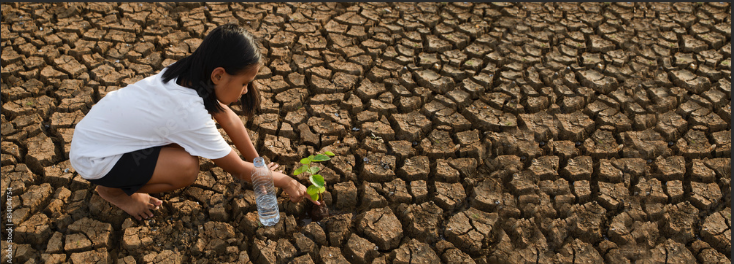
Story 5: 2058 – The Summer Without Water
This is part three of the Five Generations series, following one British family through the climate emergency from 2035 to 2100. Each story shows two possible futures: what happens if we fail to act, and what becomes possible when we choose climate action. These are not predictions; they are possibilities. The future is not written yet.
By the 2060s, water scarcity and agricultural transformation have become defining features of British life. The ten-year-old from 2035 is now a parent themselves, trying to explain resource rationing to their own children. Whether East Anglia resembles a managed agricultural region or a dust bowl depends on infrastructure investments made decades earlier. Food security and water availability are no longer abstract policy concerns but daily realities.
Your Granddaughter, Age 35
Your granddaughter, now thirty-five, lives in what used to be called the breadbasket of England. East Anglia in 2058 is experiencing its fourth consecutive year of agricultural drought, a term that has become grimly familiar. A term that means food insecurity. A term that means watching crops fail and prices soar, and elderly people making choices no one should have to make.
The reservoir is at 23% capacity. It is early June.
The drought has intensified by 74% since mid-century, exactly as the models predicted. Water restrictions are now permanent from April through October. Her young daughter has never known a summer when you could freely water a garden or wash a car.
“How do you tell a seven-year-old that the world is dying because people who came before decided that quarterly profits mattered more than her future?”
The child asks why the fields are brown when they should be green. Your granddaughter tries to explain, but how do you tell a seven-year-old that the world is dying because people who came before decided that quarterly profits mattered more than her future?
The Science Behind This Story
Drought intensification: Met Office and Centre for Ecology and Hydrology projections indicate that average summer rainfall in the UK could decline by approximately 25% by 2050, with river flows potentially declining by up to 45%. Under high emissions scenarios, agricultural drought frequency is projected to increase by up to 74% by mid-century.
Water scarcity timeline: The Environment Agency’s National Framework for Water Resources indicates that without intervention, the amount of water available in England could be reduced by 10 to 15% by mid-century, with some rivers seeing up to an 80% decrease in water during summer months. The southeast of England faces the most severe water shortages, with possible water rationing necessary by 2045.
Agricultural land at risk: Over half of the UK’s highest quality agricultural land (Grade 1) is at risk of flooding, while simultaneously facing increased drought stress during growing seasons. This dual threat creates significant food security challenges. Water demand for agriculture could increase by up to 35.5% by 2050, even under low-carbon scenarios, as farmers attempt to irrigate drought-stressed crops.
Recent precedent: The summer of 2022 demonstrated these projections becoming reality. July 2022 was the driest month since 1935 for England as a whole, and the driest on record for East Anglia, southeast and southern England. As of August 2025, several parts of England are again experiencing drought conditions, with the Environment Agency convening its National Drought Group after England experienced only 57% of average May rainfall.
Heat-related mortality in the 2050s: Under high emissions scenarios, heat-related mortality in the UK is projected to reach between 10,000 and 10,317 deaths per year in the 2050s. Your granddaughter sees elderly neighbours choosing between food and cooling during heatwaves that now kill thousands annually.
Sources: Met Office; Centre for Ecology and Hydrology; Environment Agency National Framework for Water Resources (2020); G20 Climate Risk Atlas: United Kingdom; House of Commons Library; Carbon Brief (2025)
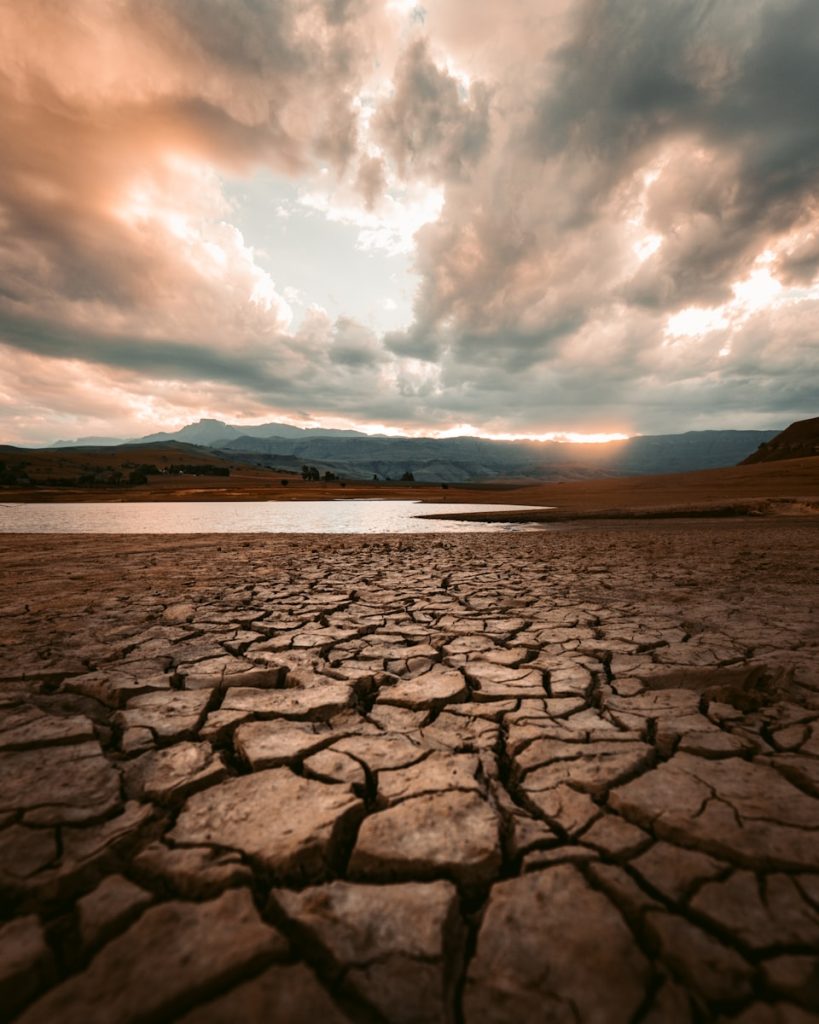
Your granddaughter works for a food distribution company. She sees the price volatility, the supply chain disruptions, the increasing dependence on imported staples as domestic yields decline. She sees elderly neighbours choosing between food and cooling during heatwaves that now kill over 10,000 people annually in the UK.
She remembers her mother telling her about the coastal home they lost. She remembers her grandfather talking about the heatwaves of the 2030s as exceptional events. Now, temperatures regularly exceed 40°C each summer. The exceptional has become routine. The unthinkable has become normal. And still, it gets worse.
Your granddaughter is exhausted. She is exhausted from adapting, from explaining to her daughter why the world is like this, from the constant low-level anxiety about water, heat, and food security. She is exhausted from watching elderly neighbours die during heatwaves that kill over 10,000 people each summer now. She is exhausted from the funerals, from the crop failures, from the quiet, grinding knowledge that this is only going to get worse for her daughter.
She is part of a population under chronic climate stress, and there is no relief coming. Only adaptation. Only endurance. Only survival.
She wonders, sometimes, what it was like to live in a time when summer meant joy instead of dread, when water came from taps without rationing. When the future felt open instead of closing in, she wonders what those people, the ones who could have stopped this, told themselves to sleep at night.
A seven-year-old asking why there is no water in 2058 is a question that should never need answering. The difference between these futures is infrastructure investment, agricultural transformation, and water management systems built in the 2020s and 2030s. Between a society that anticipated a crisis and one that sleepwalked into it. Between land managed for resilience and land exploited to exhaustion. Your granddaughter’s ability to provide for her child depends on decisions made long before that child was born.
Next: Your Granddaughter: 2058, The Summer of Abundance, The Hopeful Alternative “Water management has been transformed. The National Water Infrastructure Programme, completed in 2045, created interconnected regional systems that move water from wet to dry areas efficiently”