
Story 7: 2075 – The City That Could Not Cope
This is Story 4 of the Five Generations series, following one British family through the climate emergency from 2035 to 2100. Each story shows two possible futures: what happens if we fail to act, and what becomes possible when we choose climate action. These are not predictions; they are possibilities. The future is not written yet.
This blog is about how your generation will die. By 2075, lethal heatwaves could kill tens of thousands of elderly Britons every summer, or effective adaptation could protect vulnerable people. You will read two versions of an elderly woman’s fate during a heatwave: one where she dies alone in an overheated flat, and one where community care and climate-resilient housing keep her safe. This is about dignity, care, and whether we protect the people who built our society. Read this to understand why climate adaptation is a matter of life and death for those you love.
Your Great-Granddaughter, Age 70
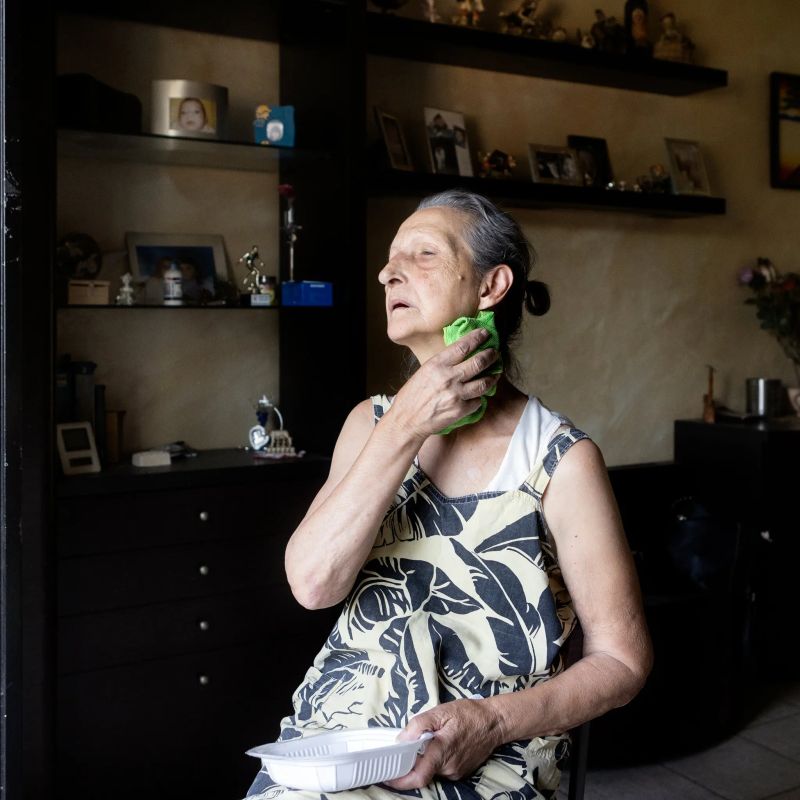
Your great-granddaughter is 70 years old in 2075. She lives alone in a tower block in East London, one of millions of elderly people in urban areas who are now categorised as ‘extreme heat vulnerable’
What a clinical phrase for people who are being slowly cooked to death in their own homes!
It is August. The temperature has not dropped below 28°C at night for three weeks. Her flat, a single-aspect unit built in the 1960s, has become unlivable. The walls radiate heat even after the sun goes down. She lies on her bed, too hot to sleep, too exhausted to move. She cannot afford air conditioning. Even if she could, the grid is under strain, with rolling power restrictions during peak demand. The infrastructure built for a temperate climate cannot cope with what Britain has become.
“She is trapped in a building that is killing her, along with thousands of others just like her”
She has chronic obstructive pulmonary disease, common in her age group, made worse by decades of increasing air pollution and heat stress. Every breath is labour. Every movement is an effort. She knows she should go to a cooling centre, but the nearest one is forty minutes away on public transport that is disrupted by heat-related rail buckling. She does not have the strength for that journey. She is trapped in a building that is killing her, along with thousands of others just like her.
The Science Behind This Story:
Heat-related mortality projections for the 2070s: Peer-reviewed research from the London School of Hygiene and Tropical Medicine and University College London projects that under high emissions scenarios with minimal adaptation, heat-related deaths in the UK could reach 34,027 annually by the 2070s. This represents a more than fifty-fold increase from the current baseline of approximately 634 deaths per year. Even under optimistic scenarios with significant adaptation efforts, annual heat-related deaths are still projected to reach 4,592 by the 2070s.
Urban heat island effect: Research published in Environmental Health demonstrates that the urban heat island effect can contribute approximately 50% of heat-related mortality during major heatwaves in cities like London. Urban areas can be up to 10°C hotter than surrounding rural areas, with temperatures in city centres remaining elevated even at night when cooling would normally occur. This ‘nocturnal urban heat island’ prevents vulnerable residents from recovering from daytime heat exposure.
Building vulnerability: Studies from University College London demonstrate that around 20% of UK homes currently overheat during summer heatwaves, with buildings from the 1960s and 1970s particularly at risk. Top-floor flats in multi-dwelling buildings are especially prone to dangerous indoor temperatures. Research shows dwelling characteristics cause greater variation in heat exposure risk than the urban heat island effect itself, meaning the homes that most vulnerable people live in directly determine their survival chances.
Elderly vulnerability: People aged 75 and over face heightened vulnerability during extreme heat events due to reduced tolerance to dehydration, compromised thermoregulatory capacity, and exacerbation of cardiovascular and respiratory conditions. The proportion of the UK population aged 85 years and over is projected to double in the next 25 years, significantly increasing the population at extreme heat risk.
Healthcare system pressure: During the 2022 heatwaves, NHS services faced significant strain, with hospitals reporting operating theatres too hot to function safely. Research indicates that for every 1°C rise above heat thresholds, mortality increases by up to 2.5%, emphasising the cumulative burden prolonged heat events place on both individuals and health systems.
Sources: London School of Hygiene and Tropical Medicine; University College London; Environmental Health journal; UK Health Security Agency; Cities and Health systematic review (2023); Parliamentary Environmental Audit Committee
The NHS called her yesterday. They are triaging heatwave patients. They asked about her symptoms, told her to stay hydrated, and said to call 999 if she develops confusion or stops sweating. The hospitals are overwhelmed. Operating theatres are too hot to function safely. Staff productivity has collapsed. People are dying in corridors, waiting for care that cannot come.
The system has broken. She knows that if she calls for help, help might not arrive in time. She knows she might die alone in this heat, one more statistic in a summer that will claim tens of thousands.
Your great-granddaughter survives this heatwave. Many of her neighbours do not. She attends four funerals in September. All heat-related. All preventable. All were predicted decades ago by scientists who were ignored and dismissed.
She thinks about her great-grandfather, your son, who experienced that first frightening heatwave as a ten-year-old in 2035. She thinks about how that heat, once shocking, would now be considered mild. A reprieve. A mercy. She thinks about how the warnings were there, how the science was clear, how the choices were made anyway.
Four of her neighbours are dead. She knew their names. She knew their stories. And she knows, with the terrible clarity that comes from living through decades of worsening crisis, that their deaths were a choice. Not her choice. Not their choice. But someone’s choice. Made in boardrooms and parliaments and shareholder meetings, decades before she was born.
Elderly people dying in an overheated flat in 2075 represents the culmination of decades of policy failure. The difference between 34,000 heat deaths and 4,500 is not luck or weather variability. It is infrastructure, housing quality, healthcare system resilience, and a social contract that either protects vulnerable people or abandons them. These deaths are not inevitable consequences of climate change. They are preventable outcomes of choices made about how society values its most vulnerable members. Your great-granddaughter’s fate was decided long before that heatwave arrived.
Previous: 2058: Your Granddaughter, Age 35 – The Summer Without Water
Next: Your Great Granddaughter: 2075, The City That Cares