
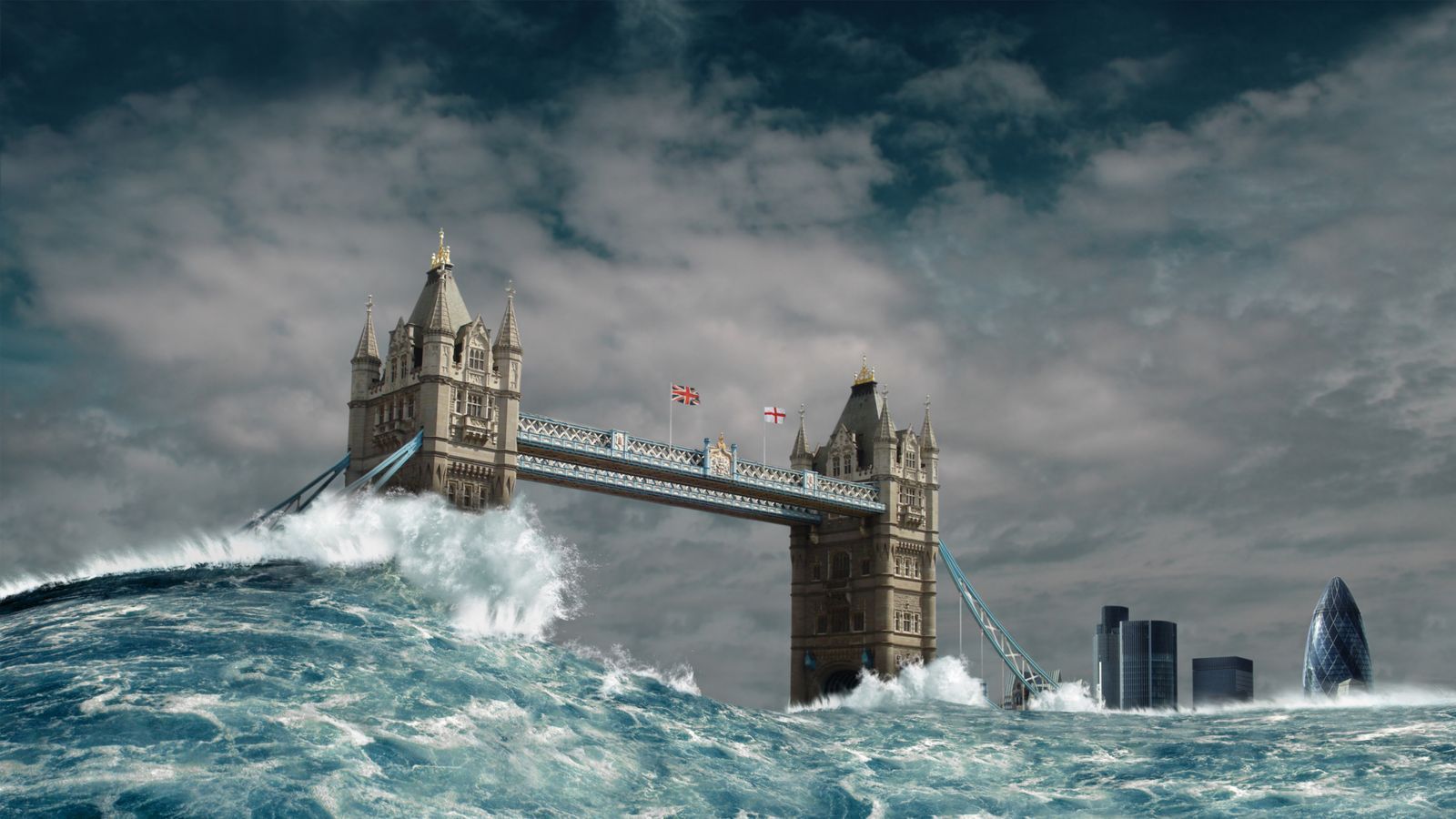
Story 9: 2100, The Future We Are Creating
By the end of the century, the consequences of decisions made in the 2020s and 2030s will have played out across three generations. A young person in 2100 inherits either a world of managed adaptation and relative stability, or one of compounding crises and system collapse. They are the great-great-grandchildren of someone alive today. Their reality is the direct result of the choices we make now. This is not the distant future. This is the world we are actively creating.
Your Great-Great-Granddaughter, Age 20
Your great-great-granddaughter is twenty years old in 2100. She has never known a stable climate. She was born into a world of permanent adaptation, managed retreat, and climate grief. She was born into a world that earlier generations broke and then handed to her to somehow survive in.
Large areas of southeast England, south Wales, and central Scotland are now regularly inundated. The Thames Barrier, upgraded twice since her great-grandmother was young, operates almost continuously. Parts of Hull, Boston, and Portsmouth exist behind massive flood defences that require constant maintenance and eventually will fail. Everyone knows they will fail. It is only a question of when and how many people will die when they do.
“They study triage. They study which places can be saved and which must be abandoned.”
She studies climate adaptation at university because that is what her generation does. They do not study how to prevent climate change. That ship sailed before she was born, before her mother was born, before her grandmother was born. They study how to survive it, how to retreat from it, how to mourn what is lost. They study triage. They study which places can be saved and which must be abandoned. They study how to tell communities that their homes, their histories, their futures have been sacrificed.
The Science Behind This Story
Sea level rise by 2100: Under high emissions pathways, sea levels around the UK could rise by 1 to 2 metres by 2100, with the English Channel experiencing rises of 1 to 1.6 metres. The Intergovernmental Panel on Climate Change has advised that a global sea level rise of 2 metres by 2100 cannot be ruled out. This would fundamentally transform the geography of coastal Britain.
Flood risk escalation: Current flood risk affects 6.3 million properties in England. The Environment Agency projects this will rise to approximately 8 million properties, representing around 25% of all properties, by 2050 and continuing to worsen throughout the century. Properties at high risk are projected to increase by approximately 73% between 2036 and 2069. By 2100, under high emissions scenarios, extreme once-a-century sea level events are expected to become annual occurrences.
Infrastructure vulnerability: Around 38% of all roads and 37% of all railways in England are currently in areas at risk from one or more sources of flooding. With climate change projections, the percentage of the road network at risk rises to 46% by mid-century, and the rail network at risk rises to 54%. These figures continue to worsen towards 2100.
Areas at risk: Large areas of the UK, particularly in the southeast and northwest of England, south Wales, and central Scotland, could experience regular inundation by 2100. The Environment Agency’s 2024 assessment confirms that even with all shoreline management plan investments delivered, tens of thousands of properties will be at risk from coastal erosion by century’s end.
Rate of change: Sea level measurements have increased by 20 centimetres since records began in the mid-19th century. However, the rate of sea level rise has more than doubled between the early 20th and early 21st century, and this acceleration is expected to continue. Global sea levels reached a record high in 2020 alone, rising 3.6 inches above 1993 figures.
Sources: UK Climate Projections 2018; Environment Agency National Assessment (2024); Intergovernmental Panel on Climate Change; Climate Change Committee Third UK Climate Change Risk Assessment; Parliamentary Office of Science and Technology
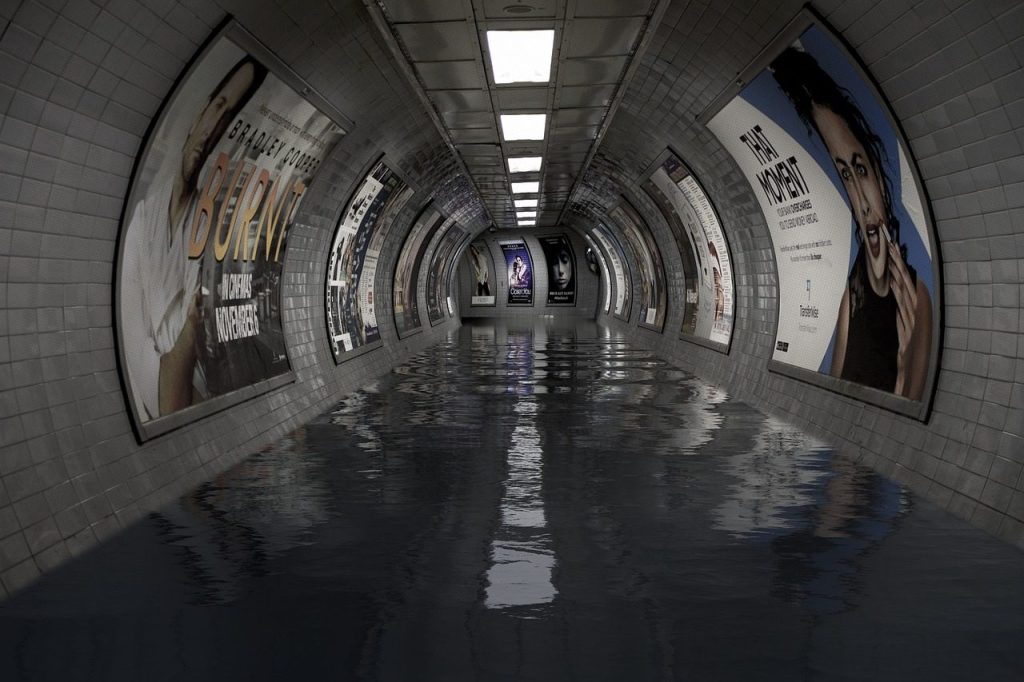
She knows her family’s history. She knows about the boy by the window in 2035, the abandoned coastal home in 2043, the droughts of 2058, the deadly heat of 2075. She knows these were not inevitable.
She knows that in the early 21st century, there was still time to choose differently. The technology existed. The solutions were known. The science was unambiguous.
She looks at photographs of the England her ancestors knew: green, temperate, with coastlines that stayed where they were, with summers that were pleasant rather than dangerous, with food and water security that was taken for granted. It seems like a different country. It was.
She looks at those photographs, and she feels something that her generation has learned to live with but never quite accept: rage. Rage at the people who knew and did nothing. Rage at the people who profited while the world burned. Rage at the people who prioritised convenience and comfort and quarterly earnings over her right to a liveable future.
“She knows their names. History has not been kind to them“
Next Week: Your Great Granddaughter: 2075, The City That Cares
- .