When we discuss climate change and its impacts, we often speak in statistics. Rising sea levels. Increased flood risk. Billions of pounds in infrastructure damage.
What we rarely discuss is who bears the heaviest burden when disaster strikes.
Disabled people are two to four times more likely to die in climate-related disasters than non-disabled people. Not because of their disabilities. But because our systems, our emergency responses, and our recovery processes are not designed with them in mind.
In the United Kingdom, over 16 million people live with a disability or long-term health condition.
Many rely on adapted homes that took years to secure. Many depend on informal networks of neighbours and community members who provide daily support. Many live in areas increasingly vulnerable to flooding, heatwaves, and extreme weather.
When climate disasters displace these individuals, they do not simply lose a building. They lose the architecture of their independence. The grab rails and wet rooms, yes. But also the neighbour who checks in each morning. The pharmacy that knows their prescriptions. The community that sees them as a person, not a problem to be solved.
And what replaces their homes? Too often, it is temporary accommodation that meets minimum accessibility standards on paper but fails in practice. Cramped spaces where wheelchairs cannot turn. Studios where medical equipment competes for space with basic belongings. Properties that tick compliance boxes while stripping away dignity.
This is the hidden crisis within the climate crisis. And it will only grow as extreme weather becomes more frequent.
The following story is fictional. But the patterns within it are drawn from real experiences, real failures, and real consequences. It is shared to put a human face on systemic problems and to ask a simple question: when we say “accessible,” do we mean it?
The Story of Margaret
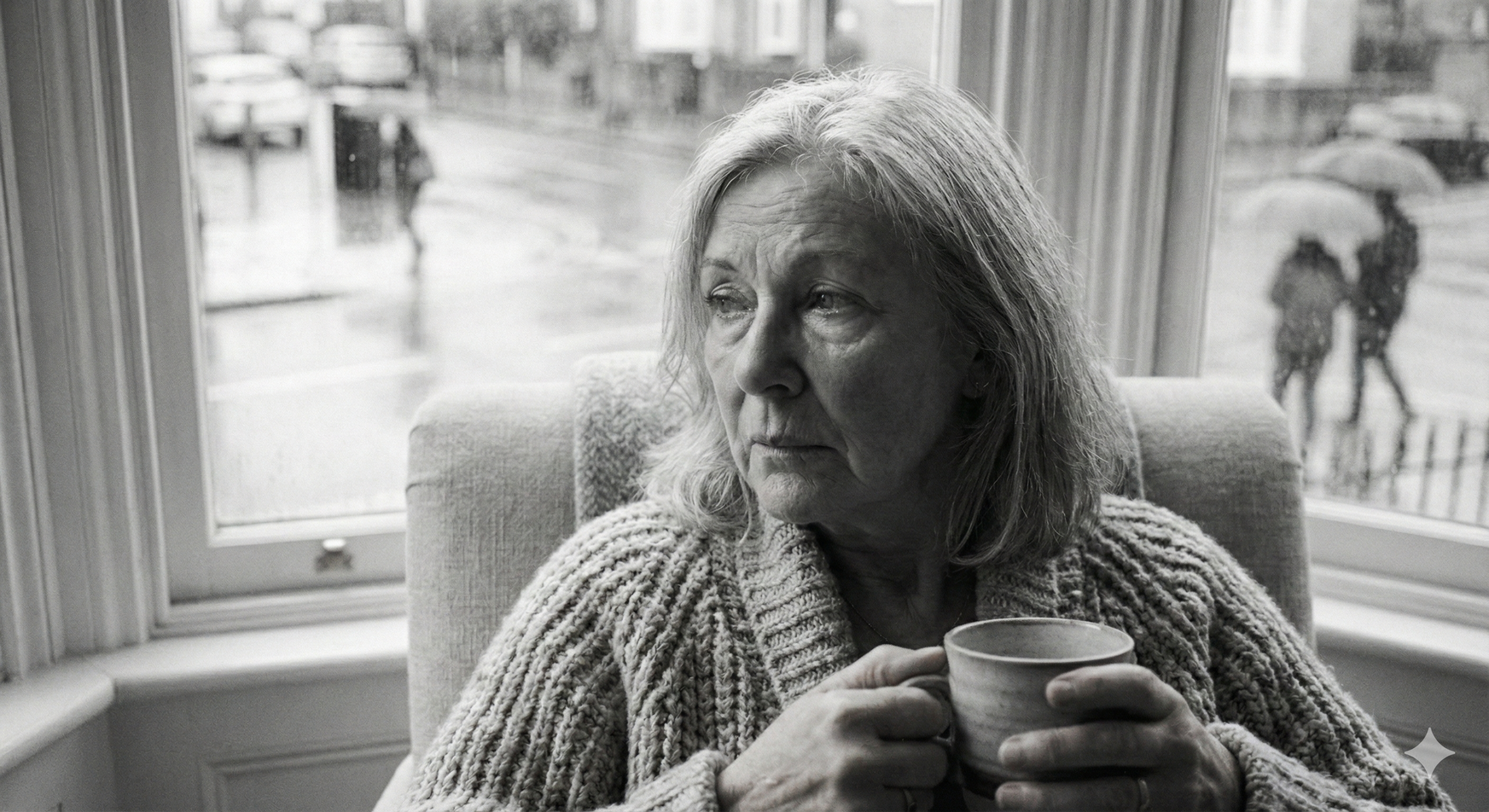
Margaret, 67, had lived in her ground-floor flat for twelve years. It wasn’t just a home. It was a space that understood her body.
The grab rails in the bathroom. The lowered kitchen counters. The wet room meant she could shower safely. The wide doorways and open-plan living space allow her wheelchair to move freely. Room to turn, to breathe, to transfer from chair to sofa without calculating angles. Room to be herself.
Every modification had been fought for, funded, and fitted over the years. But the most important adaptation of all was one that never appeared on any occupational therapist’s checklist: space. Space to manoeuvre. Space to store her equipment. Space to welcome a friend for tea without someone having to stand in the hallway.
Her home didn’t just accommodate her disability. It allowed her to live beyond it.
And then there were her neighbours.
Dave next door checked in every morning. “Just popping to the Co-op, Mags. Need anything?” Sandra across the road would bring her bins in without being asked. Callum from number 42 came around after high school and fixed her wobbly shelf last month, and wouldn’t take a penny for it.
They didn’t just help her. They knew her. They saw her. She wasn’t a “vulnerable person” to them. She was Margaret. The one with the sharp wit, the mastermind knowledge of Coronation Street, and the best shortbread recipe on the street.
This network of neighbours was its own kind of accessibility, an accessibility and community of belonging.
The night everything changed
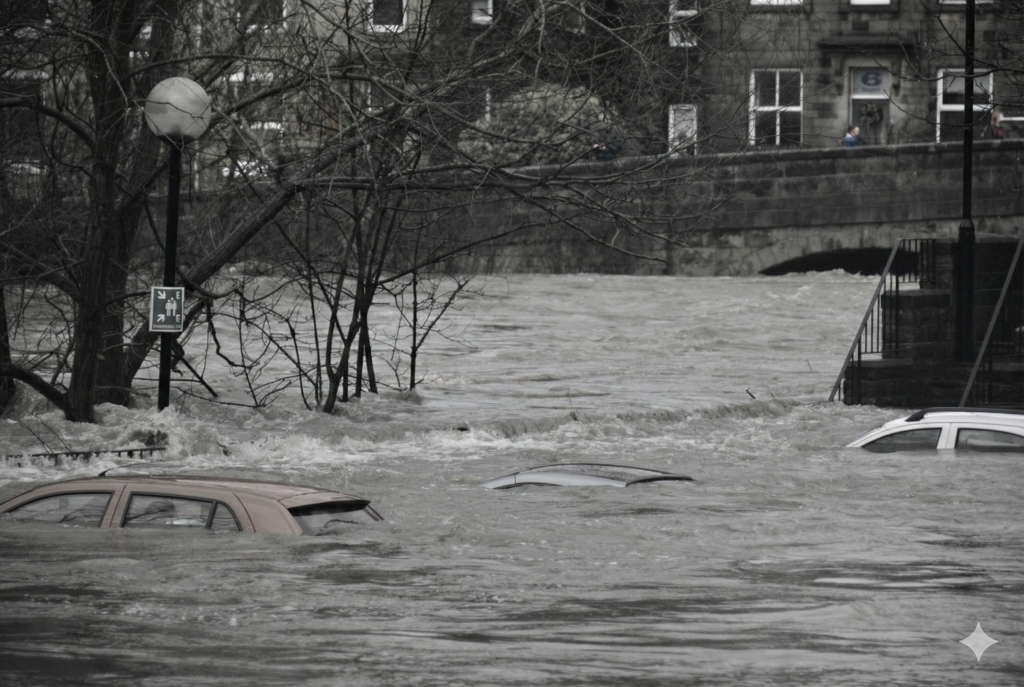
The river breached its banks at 2 am. By 4 am, the water was ankle-deep in Margaret’s hallway. By 6 am, she was being carried out by firefighters, leaving behind everything that made her life possible.
What came next was the crisis nobody talked about.
Technically accessible
She was found somewhere to live. It was all they had, they said. An adapted studio flat 23 miles away.
On paper, it met the criteria. Grab rails in the bathroom. A wet room. Wheelchair-accessible entrance. Level access throughout.
The assessment form would show green ticks down the page.
In reality, Margaret’s independence was being dismantled one cramped corner at a time.
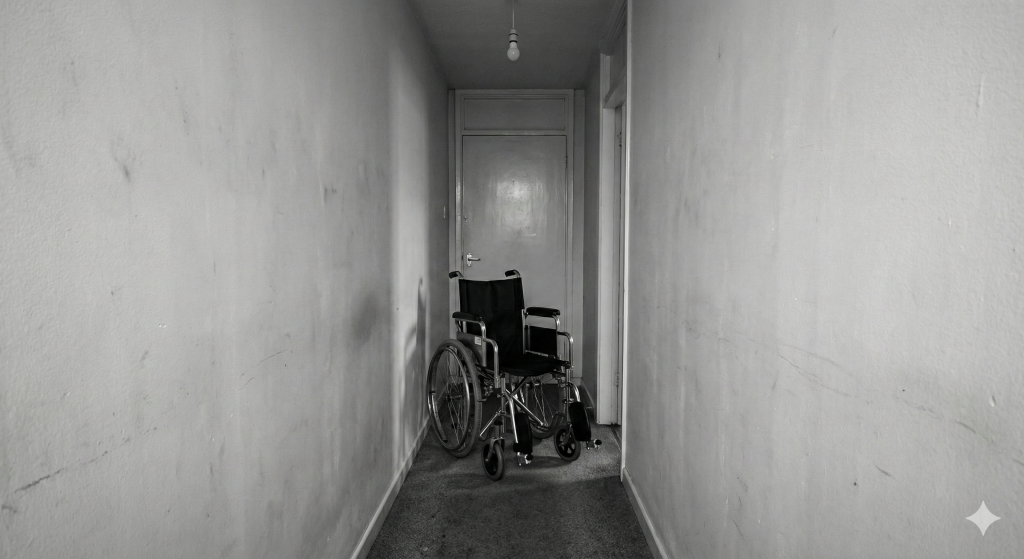
The studio was compact. Designed, perhaps, by someone who had never spent a day in a wheelchair. She could barely turn her chair without hitting the bed frame. The kitchenette was so tight that opening the fridge meant reversing into the bathroom door. Reaching the microwave required a three-point turn. Making a cup of tea became an obstacle course.
Her wheelchair, her freedom, had become a problem to be managed in a space that treated it as an afterthought.
There was nowhere to put anything. Her medical supplies competed for space with her clothes. The pressure relief cushions, the transfer board, the reaching aids, and the daily living equipment kept her independent. All piled in corners, stacked on the bed, shoved under the tiny table. The clutter made the already impossible space even harder to navigate.
She stopped inviting the care worker to make tea because there wasn’t room for two people to exist in the kitchen area at once. She stopped using her wheelchair indoors some days because it was easier to struggle between the bed and bathroom, holding the walls, than to fight the furniture.
She started to feel like her disability was the problem. Like she was too much. Took up too much room. Needed too much.
The flat was accessible. But it wasn’t livable. And Margaret began to understand that these are not the same thing.
The other accessibility she lost
But the cramped walls weren’t the cruellest loss.
It was the missing people.
No, Dave knocking each morning. No, Sandra, waving from across the road. No Callum offering to help. No one who knew that Margaret took her tea strong with one sugar. No one remembered she was allergic to plasters. No one would notice if her curtains stayed closed.
In her old street, Margaret rarely thought of herself as disabled. She was just Margaret, who happened to use a wheelchair, living her life alongside people who made that life fuller.
In the studio flat, she was a case number. A placement. A problem that had been solved on a spreadsheet.
The walls pressed in while the world outside felt impossibly far away.
She was housed. But she was no longer home.
What accessibility really means
We talk about accessibility in checklists and compliance standards. Grab rails. Ramps. Door widths are measured in centimetres.
These things matter. Of course they do.
But Margaret’s story reveals what gets missed when accessibility becomes a box-ticking exercise rather than a question about how people actually live.
Space is an adaptation. For a wheelchair user, room to turn is not a luxury. Room to store essential equipment is not a preference. Room to welcome a visitor, to move freely in your own home, to exist without constantly navigating around your own belongings. This is dignity. And dignity is not optional.
Community is accessibility. The informal networks of care that surround disabled people are not separate from their independence. They are the foundation of it. The neighbour who pops to the shop. The friend who notices when something is wrong. The street that knows your name. These connections are as vital as any handrail.
Compliance is not the same as care. A technically accessible property that makes daily life a constant struggle is not truly accessible. It is a system protecting itself from challenge, not a system protecting the person inside.
The long way home
A year later, Margaret’s flat was finally repaired. She could return.
But the street had changed. Dave had moved to be closer to his daughter. Sandra’s health had declined. Callum had gone to university.
The community that had made Margaret’s independence possible had scattered. The informal accessibility of belonging, the one that never appeared on any assessment form, had washed away with the floodwater.
The grab rails were still there. The wet room still worked. The wide doorways still let her wheelchair pass.
But the neighbours who made her life livable were gone. And rebuilding that would take years.
If it was possible at all.
The Bigger Picture
Margaret’s story is fictional. But the patterns within it are not.
Disabled people are disproportionately affected by climate disasters. People with disabilities are two to four times more likely to die in disasters than non-disabled people. Not because of their disabilities. But because emergency systems are not designed with them in mind.
Emergency housing often fails disabled people. Properties that meet minimum accessibility standards may still be entirely unsuitable for the reality of living with a disability. Space, storage, layout, location. These factors determine whether someone can live independently or merely survive.
Displacement destroys informal care networks. When disabled people are rehomed far from their original communities, they lose the social connections that keep them safe and well. Loneliness is a health risk as significant as smoking 15 cigarettes a day. For people already managing health conditions, this isolation can be devastating.
Climate change is a disability rights issue. As extreme weather becomes more frequent, more disabled people will face displacement. Without systemic change, more people will find themselves in Margaret’s position. Technically housed, feeling abandoned, isolated and lonely.
What Needs to Change
If we are serious about accessibility, we must move beyond checklists.
We must ask whether emergency housing allows people to live with dignity, not just exist within four walls.
We must recognise that community is infrastructure. Informal care networks are not optional extras. They are essential support systems that must be considered in relocation decisions.
We must design for real lives, not minimum standards. A grab rail means nothing if there is no room to reach it.
And we must listen to disabled people. Not as case studies or compliance problems. As experts in their own lives.
A Question to Carry Forward
The next time you see accessibility measured in ticks on a checklist, think of Margaret.
Think of the wheelchair with nowhere to turn. The equipment was piled in corners. The tea she couldn’t make. The neighbour who stopped knocking.
And ask yourself: are we building a world where disabled people can truly live? Or merely a world where we can say we tried?
This is a fictional story inspired by real patterns of displacement and vulnerability. It is shared to humanise the systems and spark deeper conversations about what accessibility truly means in a changing climate.
About The Climate Connector
The Climate Connector shares human-centred climate stories that bridge technical expertise with personal narratives. Because climate change is not just about carbon. It is about people.
Share your thoughts
Have you or someone you know experienced displacement due to extreme weather? What did the recovery process reveal about our systems? I would love to hear your views.