
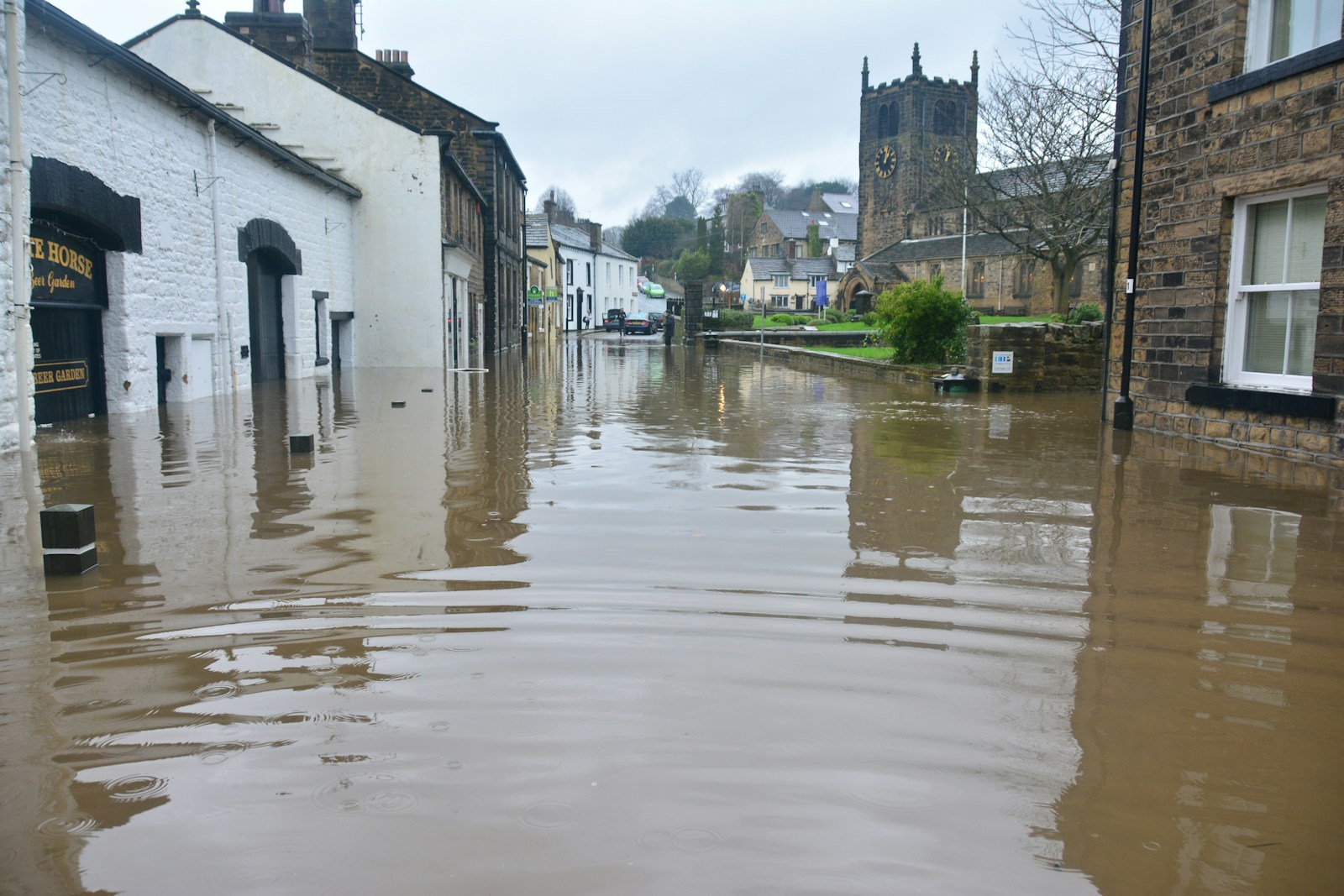
WHY WE ARE FLOODING: THE SCIENCE WE IGNORED
Right now, across the United Kingdom, people are wading through their living rooms. Rescuing photo albums from rising water. Watching their possessions float away. And asking the same question: why does this keep happening?
The headlines blame the water companies. The politicians blame the drainage systems. But there is a quieter truth we need to face: we have spent two decades systematically destroying our gardens’ ability to absorb water.
The Reality:
Between 2001 and 2021, we paved over front gardens equivalent to 22 Hyde Parks in London alone. Research from the Royal Horticultural Society found that nearly 5 million front gardens across Great Britain have been completely paved over. That is an area larger than 200 square kilometres of impermeable surface where water once soaked into the soil.
The impact? A University of Sheffield study found that streets with paved front gardens experience 50% more surface water flooding than streets with planted gardens. When rainfall hits concrete, block paving, or artificial turf, up to 95% runs straight off into already overwhelmed drainage systems. When it hits soil and plants, 60-80% is absorbed, filtered, and slowly released.
And the rainfall is intensifying. The Met Office reports that extreme rainfall events in the UK have increased by 17% since the 1960s. By 2070, winter rainfall intensity could increase by a further 35%.
We are putting a lot on old Victorian drainage systems, designed for different rainfall patterns, to cope with 21st-century climate reality, whilst simultaneously pouring concrete over the natural sponges that once helped manage that water.
Dr Sisay Simachew from the University of Sheffield puts it bluntly: “We have fundamentally changed how water moves through our urban environments. Every paved garden is a small contributor to a very large problem.”
The Environment Agency estimates that surface water flooding alone costs the UK economy £270 million annually. That cost is rising. Not just because of climate change, but because we keep choosing block paving over biodiversity, artificial turf over real grass, parking spaces over permeable ground.
This is the story of one street that decided to make a change.
2035: The Initial Turning Point
Sarah Chen stands in her front garden with a sledgehammer, and her neighbours think she has lost her mind.
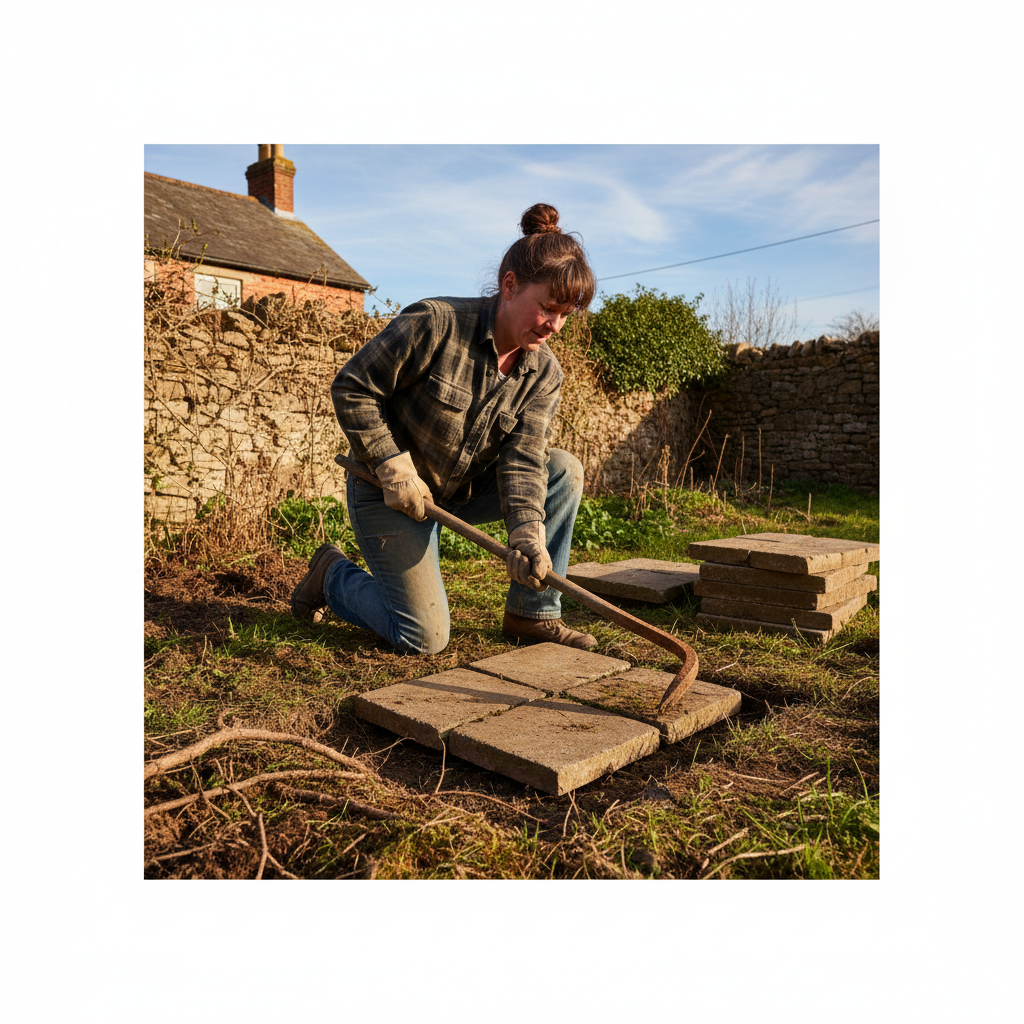
To be fair, she probably looks crazy, her hair tied back, safety goggles on, raising the hammer above her head to smash the block paving that has covered her garden for fifteen years.
Crack, the first slab splits.
From Number 39, Mrs Patterson watches through net curtains, shaking her head. From Number 43, the Johnsons exchange glances. She is ruining her property value. She is making the street look scruffy. She is, frankly, embarrassing. Sarah does not care anymore.

Three floods in two years. The last one reached halfway up her living room wall. The insurance company doubled her premium and added a flood excess of £5,000. The loss adjusters said the same thing every time: “Unprecedented rainfall. Climate change. Nothing we can do.”
But Sarah is a civil engineer. She knows exactly what they can do. She has been watching the rainfall data for her postcode. Watched the intensity increase, watched the flood maps redraw themselves every five years, swallowing more streets into high-risk zones.
Twenty-seven houses. Twenty-three with completely paved front gardens. Hers included. That is roughly 1,150 square metres of impermeable surface on one small street. During a heavy rainfall event, that is approximately 50,000 litres of water with nowhere to go except into drains designed in 1952 for a population half the size and rainfall patterns that no longer exist.
Crack, another slab.
Her daughter, Emma, helps carry them to the skip. At fifteen, Emma has grown up with flood warnings on her phone, sandbags in the garage, and the smell of damp that never quite leaves after the water recedes.”Will this actually work?” Emma asks, hefting a chunk of concrete, “I don’t know,” Sarah admits. “But doing nothing definitely doesn’t work.”
By evening, the paving is gone. The garden looks like a building site. Raw earth, exposed. Ugly, but when the rain starts that night, heavy and persistent, Sarah stands at her window and watches water soak into the soil for the first time in fifteen years.
It is not much. But it is something.
2040: THE CONVERTS
The flood of January 2033, days of relentless rain, the drains give up, water pours down the street like a river, seeking the path of least resistance. That path leads straight through front doors, letterboxes, and air bricks. Twenty houses flood, thousands of pounds of damage, weeks of disruption, Insurance companies start using words like “uninsurable” and “managed retreat.”
Sarah’s house does not flood. Her rain garden, now two years established, swallows the water. Native wildflowers bob under the deluge. The soil, broken up and amended with organic matter, drinks deeply. The overflow soakaway channels excess water safely away from the foundations.
The Johnsons from Number 43 knock on her door three days after the water recedes, “Tell us what you did,” Marcus Johnson says simply.
Within six months, two more gardens will be ripped up. The Johnsons go further than Sarah did, installing a bioswale along their front boundary, a shallow channel filled with native wetland plants that can handle both flooding and drought. The Patels at Number 51 create a rain garden specifically designed to capture water from their driveway, which they have replaced with permeable paving.
Mrs Patterson still has her block paving. So do fourteen other houses. The street begins to split. The paved and the planted. The holdouts and the converts.
When the rain comes now, you can see the difference. Water sits on half the driveways, pooling, searching for gaps. On the other hand, it vanishes into the ground within minutes.
Sarah starts a residents’ WhatsApp group called “Number 47 Depaving Project.” The name is a joke, but the intent is serious. She shares information about grants from the local council for sustainable drainage. Post links to the Royal Horticultural Society’s guides on rain gardens. Explains how removing even a small section of paving can make a difference.
Eight people join. Then twelve.
Emma, now at university studying environmental science, comes home for the summer and volunteers to help the elderly residents on the street redesign their gardens. She draws plans, sources native plants, and calculates the water retention capacity of different soil types.
“You started something,” she tells her mother. “No,” Sarah says, watching Marcus Johnson plant a young rowan tree where his driveway used to be. “We are finishing something. Something we should never have started.”
2045: THE TIPPING POINT
Fourteen gardens are now permeable. Mrs Patterson is one of the holdouts, but even she has removed a section of her paving to install two large planted containers, grudgingly admitting that the lavender looks nice and the bees seem to appreciate it.
The real proof comes in the water; the flooding has stopped. Not everywhere. The streets around them still flood. The drain system still overflows. But Number 47’s street has not had standing water in three years.
The local authority takes notice. A researcher from the university comes to measure infiltration rates, install monitoring equipment, and track where the water goes. She publishes a paper showing that the depaved gardens are capturing approximately 65% of rainfall on site, reducing the burden on the drainage system by an estimated 180,000 litres per major rainfall event.
The local paper runs a story: “The Street That Stopped Flooding.” The article includes photos comparing 2035 and 2045. The difference is remarkable. What was once a monotonous parade of grey paving is now a tapestry of green. Wildflower gardens spill over low walls. Trees shade the pavement. Native hedgerows provide privacy without requiring fences.
Sarah, now in her mid-fifties, finds herself giving talks at community centres. The council invites her to sit on a climate adaptation working group. She demurs, feeling out of her depth, until Emma points out that she has done more for flood resilience than most flood engineers.
The remaining holdouts begin to crack. Not because of pressure, but because their insurance premiums keep rising whilst their neighbours’ drop. Because their properties are increasingly difficult to sell, whilst Number 43, with its award-winning rain garden, goes for 8% above the asking price.
By the end of 2045, nineteen gardens are permeable.
2055: THE TRANSFORMATION
Emma Chen brings her own daughter to visit Grandma Sarah at Number 47. Lily is seven years old, and she has never known the street any other way. To her, the bioswales are normal. The rain gardens are where you find frogs. The fact that you can drink from the water butt after it is filtered is just what you do.
Sarah looks out at the street. Twenty-six gardens are now permeable. Mrs Patterson, who passed away two years ago, left instructions in her will for her son to remove the remaining paving and plant a memorial garden. He did. Native wildflowers chosen specifically for their water management capacity now grow where concrete once lay.
The council now offers grants covering 75% of depaving costs. Planning regulations have changed to make front garden paving significantly more difficult to install and easier to remove. New developments must include sustainable drainage systems as standard, not as optional extras.
2065: THE LEGACY
Emma Chen stands where her mother once stood, sledgehammer in hand, but this time it is a ceremonial gesture.
Sarah passed away last spring, aged 82, in the house she had purchased thirty years earlier. The funeral was held in the community orchard that now occupies the old car park at the end of the street, under the canopy of the trees the residents planted in 2047.
Lily, now 27 and a landscape architect specialising in climate-resilient urban design, gives a short speech. She talks about her grandmother’s courage, her engineering mind, and her refusal to accept flooding as inevitable.
“My grandmother understood something that took the rest of us too long to learn,” Lily says. “Water is not the enemy. Water is life. The flooding was not the water’s fault. It was ours. We took away the water’s home, and then we were surprised when it came looking for another one.”
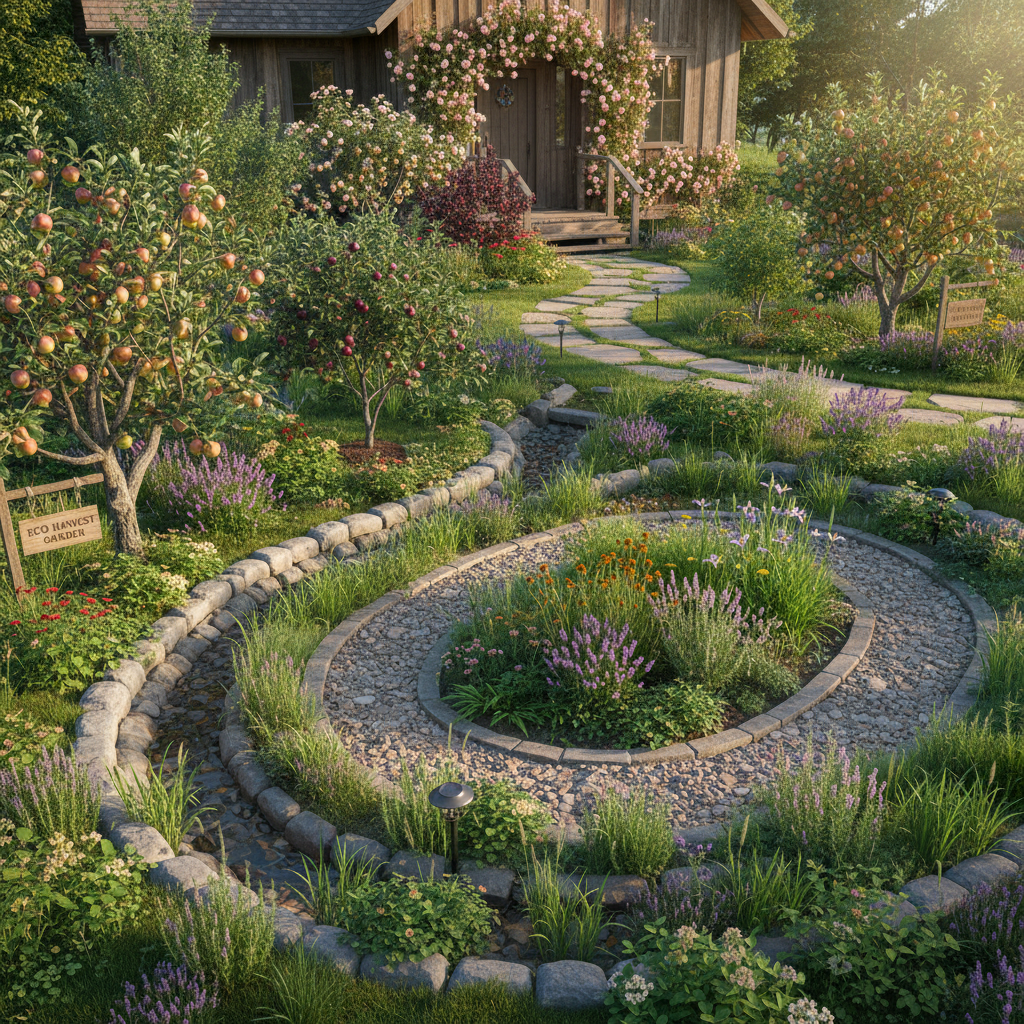
The street is unrecognisable now from the photographs of 2035. Every garden is permeable. The road itself has been partially depaved, replaced with permeable surfaces and bio-retention cells. Street trees create a canopy that shades the pavement in summer and channels water to their roots in winter.
The monitoring data tells the story, Zero flooding events since 2046. The average air temperature is 4.2 degrees cooler than on comparable streets.
Biodiversity indices comparable to semi-rural environments. Property values 15% above the neighbourhood average, not despite the removal of parking, but because of the green infrastructure that replaced it.
The model has spread. By 2065, an estimated 2.3 million front gardens across the UK have been depaved. Local authorities from Manchester to Merthyr Tydfil have adopted “sponge city” principles, incorporating nature-based solutions into flood defence strategies.
The insurance industry has changed its models. Properties with sustainable drainage features receive premium reductions. Properties with extensive paving face surcharges. The financial incentives now align with the hydrological reality.
Emma walks home through rain that would have caused chaos in 2035. Now it simply disappears into the ground, into rain gardens and bioswales and permeable surfaces, doing what water has always done when given the chance.
She thinks about her mother, standing in a garden full of rubble, uncertain if removing the paving would make any difference. It did. One garden at a time, they changed everything.
The transformation proves its worth in unexpected ways. The summer of 2052 brings the longest drought in recorded history, streets with paved gardens become heat islands, and the concrete radiates stored warmth into homes already struggling to stay cool. But Number 47’s street remains noticeably cooler. The deep-rooted native plants access groundwater that paved surfaces block.
The soil, enriched and structured over decades, holds moisture even through weeks without rain. The trees provide shade, and the vegetation transpires, cooling the air. The same infrastructure that prevented flooding now prevents drought stress.
But what about our town centres? Our retail parks? Our business districts? Do we really need all that block paving?
The mathematics are staggering. The average UK town centre has 60-75% impermeable surface coverage. Some retail parks reach 90%. That is millions of square metres of potential rain gardens, bioswales, and green infrastructure.
Links and resources.
Royal Horticultural Society – Greening Grey Britain The RHS campaign provides comprehensive guidance on depaving gardens and creating rain gardens. https://www.rhs.org.uk/science/gardening-in-a-changing-world/greening-grey-britain
University of Sheffield – Urban Flooding Research Dr Sisay Simachew and colleagues have published extensive research on the impact of paved gardens on surface water flooding. https://www.sheffield.ac.uk/civil/research/water Key finding: Streets with paved front gardens experience 50% more surface water flooding than streets with planted gardens.
Met Office – UK Climate Projections Data on rainfall intensity changes and future climate scenarios. https://www.metoffice.gov.uk/research/approach/collaboration/ukcp Key finding: Extreme rainfall events in the UK have increased by 17% since the 1960s, with winter rainfall intensity projected to increase by a further 35% by 2070.
Environment Agency – Flood Risk and Costs Information on surface water flooding costs and flood risk management. https://www.gov.uk/government/organisations/environment-agency Key finding: Surface water flooding costs the UK economy £270 million annually.
CIRIA – Sustainable Drainage Systems (SuDS) Manual: Technical guidance on designing and implementing sustainable drainage systems. https://www.ciria.org/CIRIA/Memberships/The_SuDs_Manual_C753_Chapters.aspx
Grants and Financial Support:
Many local authorities offer grants for depaving and sustainable drainage projects. Check your council website for:
- Front garden depaving grants
- Sustainable drainage system installation support
- Climate adaptation funding schemes
Example local authority schemes:
- London Borough grants (various boroughs offer £500-£2,000)
- Welsh Government Green Infrastructure grants
- Scottish Water Surface Water Management Programme
- Contact your local council’s planning or environmental services department to ask about available funding in your area.
This extra edition was inspired by the flooding events and the thousands of families currently dealing with water damage across the UK. Small changes to our gardens can make a measurable difference to flood resilience. For practical guidance on depaving and creating rain gardens, visit the Royal Horticultural Society’s Greening Grey Britain resources.